
InterGedi 2026: Luis Martínez-Kleiser discusses dialogicity in science dissemination for adolescents
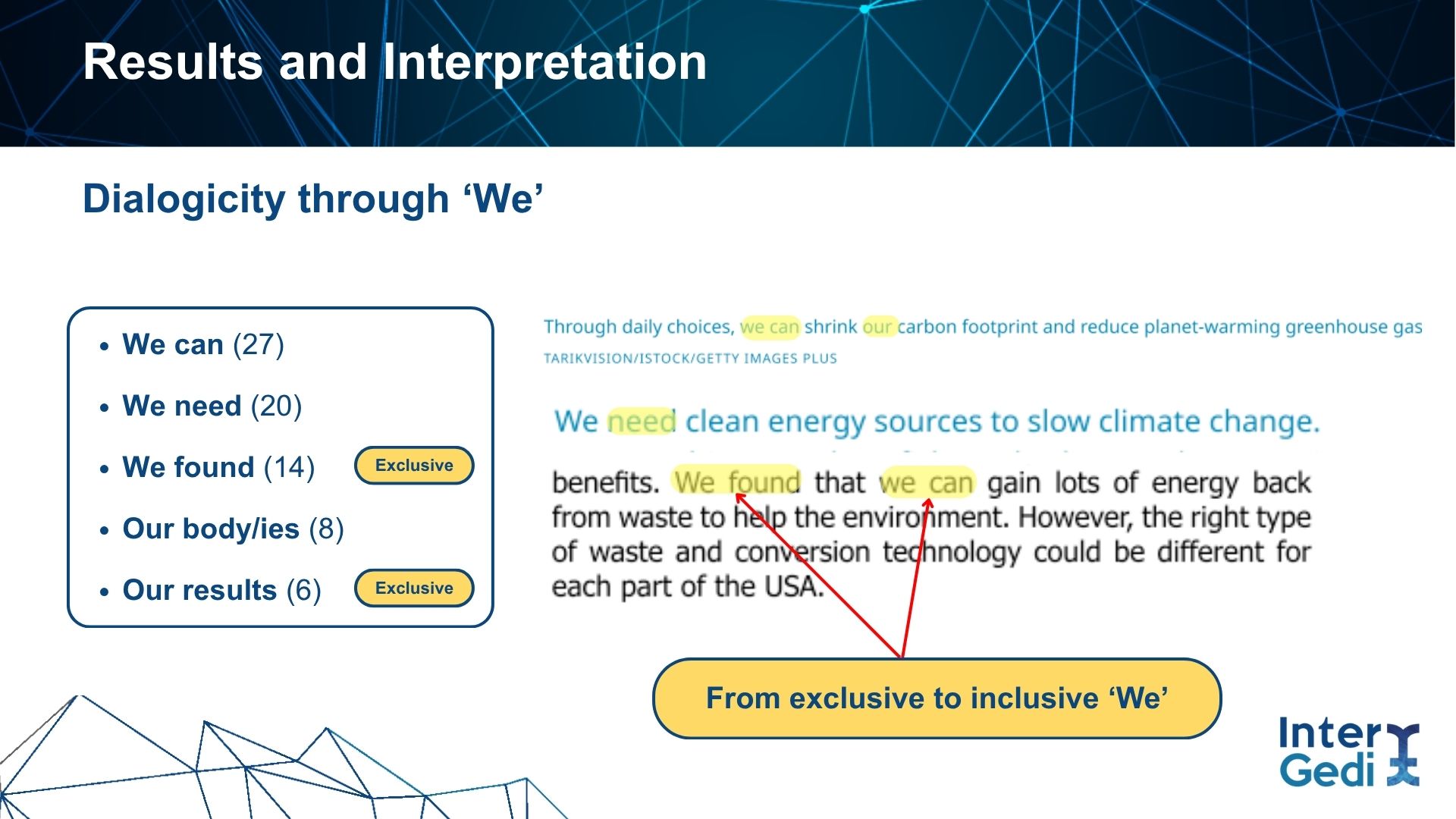
Our team member Luis Martínez-Kleiser took part in InterGedi 2026 Conference, organised by Dr Rosa Lorés, Dr Silvia Murillo-Ornat and Ana E. Sancho-Ortiz. Our end-of-project conference, focused on “Digital recontextualization practices in expert knowledge communication”, spanned March 18th-20th, 2026 and was celebrated at the Faculty of Arts (University of Zaragoza).
His paper was titled “Dialogicity in the recontextualization of digital science dissemination for adolescents: Analyzing the role of directives and reader references”. There, Luis examined how dialogic markers are employed to make scientific research digestible and engaging, eliciting the attention and understanding of the targeted adolescent readership.
His abstract can be found below:
Dialogicity in the recontextualization of digital science dissemination for adolescents: Analyzing the role of directives and reader references
The internet has become a globally accessible platform through which scientists can communicate their findings to diverse audiences, fulfilling the desire and need to disseminate their work (Lorés, 2023). However, the existence of knowledge asymmetries (Maier and Engberg, 2015) between experts and nonexperts requires the recontextualization of complex research and the deployment of engagement strategies that can contribute to knowledge popularization.
While considerable research has examined scientific dissemination practices, relatively few studies have explored how this knowledge is recontextualized for teenage audiences. This particular audience is still being educated and accesses websites to be informed and to build their own informed criteria, so further bridging of such knowledge asymmetries may be needed. In this context, dialogicity plays a fundamental role in understanding the persuasive purposes of authors and the reactions texts intend to cause in readers (Pascual, 2025). This study aims to analyze the contribution of directives and reader references as dialogic markers to the recontextualization process and popularization of expert knowledge for adolescent audiences. It also examines the extent to which these features are employed to generate engagement (Mur-Dueñas, 2011) and are used by authors to create their own stance (Hyland, 2005).
The analysis is based on the SciDisTA corpus (Scientific Dissemination for Teenage Audiences), which consists of 30 texts on Natural Sciences and Health from three websites addressed to adolescent readers. SciDisTA is part of the SciDis database compiled by the InterGEDI research group. Data on dialogic markers were examined, combining quantitative frequency analysis using AntConc and NVivo software with qualitative discourse analysis.
The study will contribute to the understanding of the role of dialogic markers in the recontextualization of expert scientific knowledge. It will clarify how directives and reader references function in digital science dissemination and how they support the popularization of scientific discourse. The analysis will show how these are employed by expert authors to foster engagement, guide readers’ interpretation, and convey authorial stance in ways that are persuasive, comprehensible, and credible for adolescent audiences
References
Hyland, K. (2005). Stance and engagement in academic discourse. Discourse Studies, 7(2), 173–192.
Lorés, R. (2023). Dual voices, hybrid identities in digital dissemination. Círculo de Lingüística Aplicada a la Comunicación, 93, 69–84.
Maier, C. D., & Engberg, J. (2015). Exploring the hypermodal communication of academic knowledge beyond generic structures. In M. Bondi, S. Cacchiani, D. Mazzi (Eds.), Discourse in and through the media: Recontextualizing and reconceptualizing expert discourse (pp. 46–65). Cambridge Scholars Publishing.
Mur-Dueñas, P. (2011). An intercultural analysis of metadiscourse features in research articles written in English and in Spanish. Journal of Pragmatics, 43(12), 3068–3079.
Pascual, D. (2025). Dialogic markers in Ask an Expert webpages on environmental discourse. Language and Dialogue, 15(1), 156–181.