
VI SEING: Luis Martínez-Kleiser analyses discursive and multimodal strategies and their potential for EFL
PhD candidate Luis Martínez-Kleiser participated in the VI Seminar in English Studies (SEING 2026). The seminar, which was celebrated on the 8th of May 2026, took place at the Faculty of Arts (University of Zaragoza, Spain) and was titled “Research as Resistance in a World at Odds” as its motto.
Luis’s paper relied on a multimodal-discursive analysis of strategies used for enhancing knowledge intelligibility in scientific texts targeting teenage audiences. In his corpus, he identifies a common recontextualisation pattern and reflects on how the texts can be leveraged in the EFL classroom to develop adolescents’ multimodal literacy.
You can read his abstract here:
Recontextualization of scientific knowledge in adolescent-oriented digital texts: Analysis of discursive and multimodal strategies and implications for the EFL classroom
Adolescents’ access to online information enables them to consume information about Natural Science and health-related topics. This situation matches scientists’ subsidiary goal of popularizing research (Lorés, 2023) and teenage readers’ need to find reliable sources of information. However, a recontextualization process is needed to make expert knowledge comprehensible to diversified audiences, and that becomes essential to successful science dissemination (Lorés & Mur-Dueñas, 2025). How recontextualization is realized for adolescent audiences deserves closer attention.
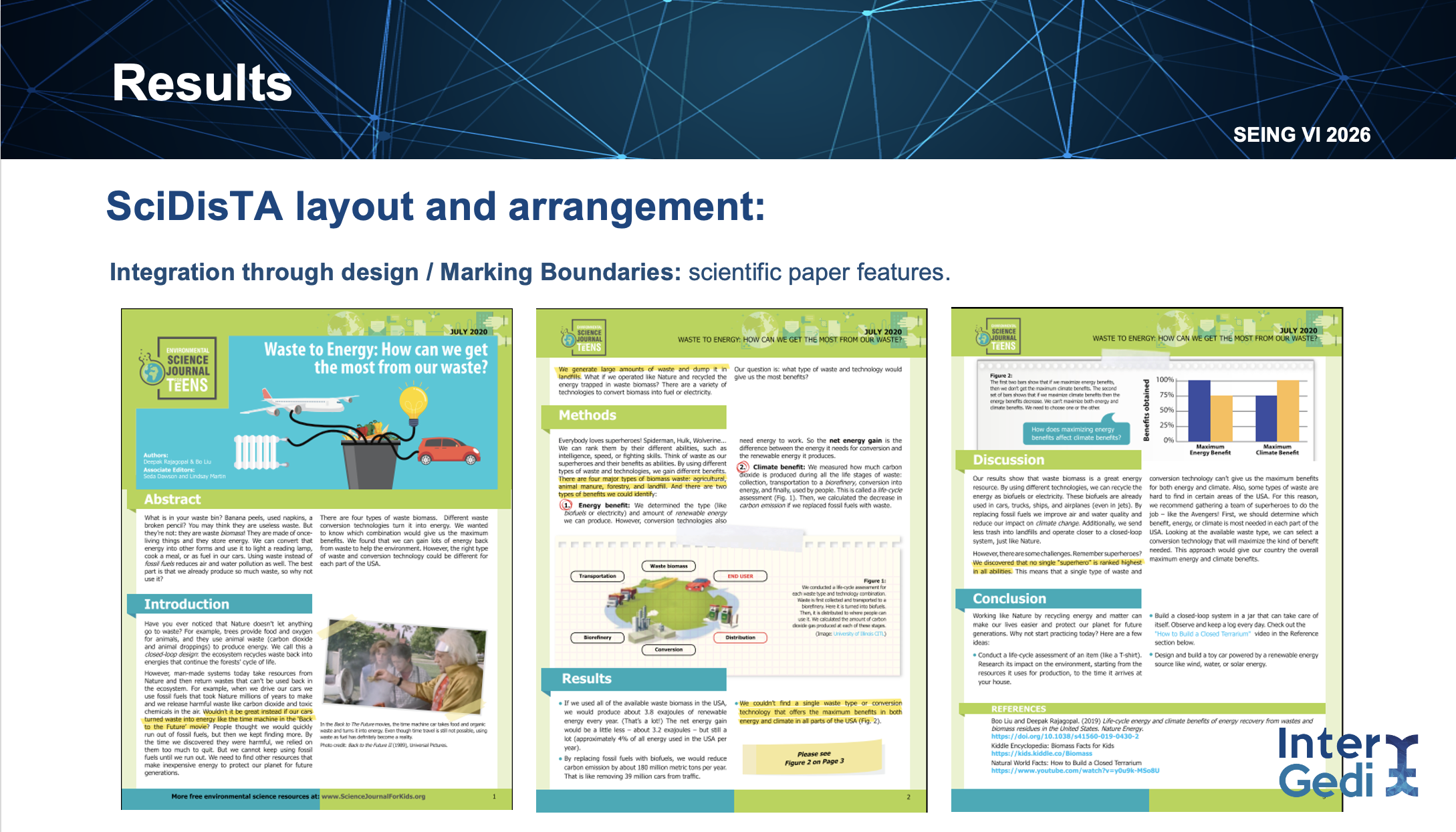
This study examines how adolescent-oriented websites make expert scientific knowledge intelligible by means of the main discursive and multimodal strategies employed. It analyzes the frequency and function of explanatory strategies, drawing on the framework of cognitive discourse functions (Dalton-Puffer, 2013) deployed in digital texts to provide reasons and causes for scientific phenomena. Engagement strategies and how these position readers (Hyland, 2005) are also objects of study. Finally, the contribution of multimodality in the recontextualization process is explored, focusing on the integration of semiotic modes (Bezemer & Kress, 2008) and how visual elements can extend or elaborate knowledge. A corpus of 30 texts from three adolescent-targeted websites was compiled to perform the study under the name SciDisTA (Scientific Dissemination for Teenage Audiences). It contains Natural Science and Health-related texts which include links to the original academic sources, proper acknowledgement of authorship and aim to make expert knowledge accessible.
Results indicate that explanatory strategies play a key role in the recontextualization process, while directives and questions appear to be relevant to generate engagement. Semiotic resources such as visuals and layout support expert knowledge accessibility for teenage audiences. Conclusions identify a recurrent recontextualization pattern and discuss the potential use of these texts in the EFL classroom and the need to boost multimodal literacy in both students and EFL teachers.
References
Bezemer, J., & Kress, G. (2008). Writing in multimodal texts: A social semiotic account of designs for learning. Written communication, 25(2), 166-195.
Dalton-Puffer, C. (2013). A construct of cognitive discourse functions for conceptualising contentlanguage integration in CLIL and multilingual education. European Journal of Applied Linguistics, 1(2), 216-253. https://doi.org/10.1515/eujal-2013-0011
Hyland, K. (2005). Stance and engagement: A model of interaction in academic discourse. Discourse studies, 7(2), 173-192.
Lorés, R. (2023) ‘Dual voices, hybrid identities: the recontextualization of research in digital dissemination scientific discourse.’ Círculo de Lingüística Aplicada a la Comunicación 93, 6984. https://doi.org/10.5209/clac.85566
Lorés, R. & Mur-Dueñas, P. (2025). (eds). Mediating scientific knowledge for diverse audiences on digital platforms. Discourse and Media [Special Issue].